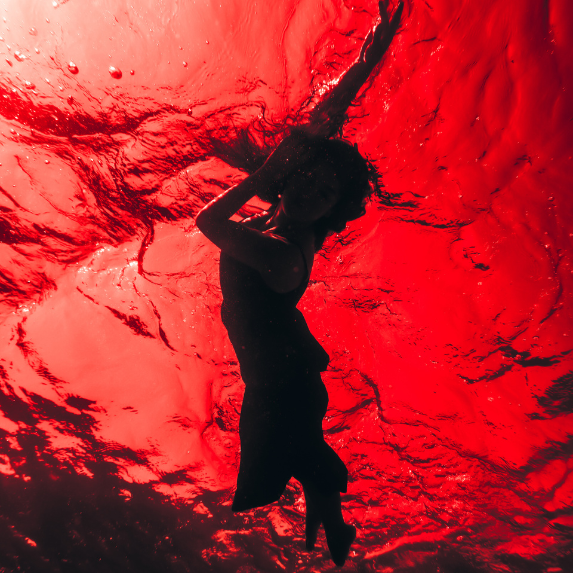
What remains of the sea when its color disappears?
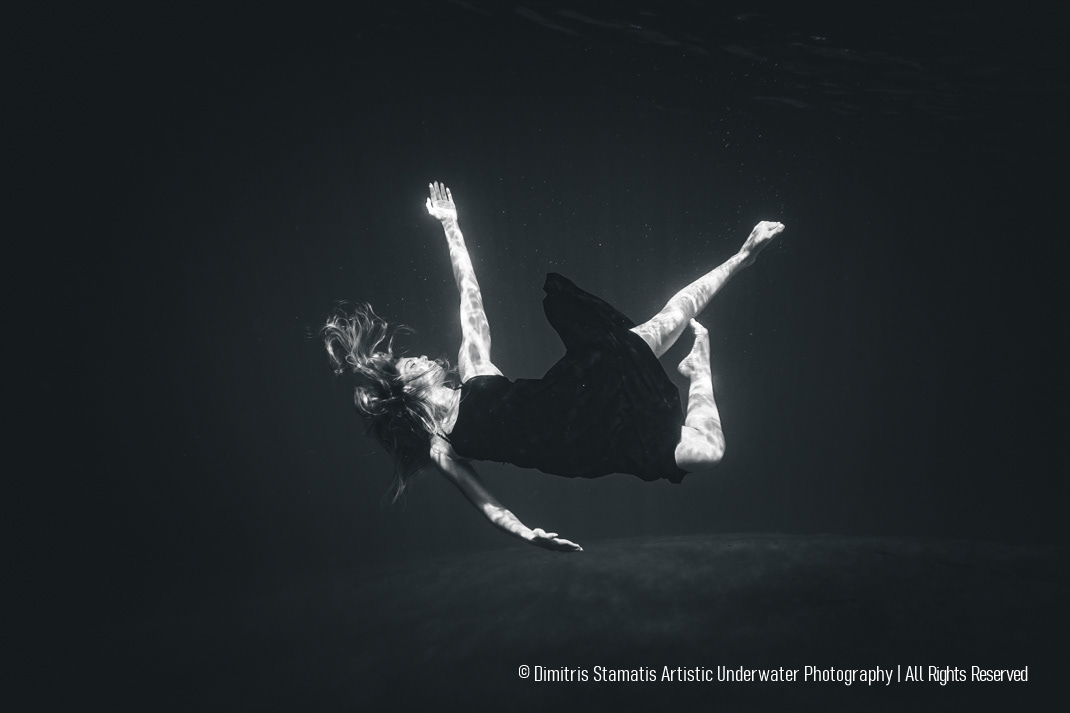
The Monochrome Series starts from this question. Removing the blue quietens the underwater world. It gets rid of the distractions, leaving only movement, tension, and the reality of a body floating in water.
Without color, the environment changes. It stops looking like a regular seascape and feels more like a personal, quiet space where small gestures matter. A shift in posture, a quiet pause, or a body giving in to the current become the details that hold the emotion of the frame.
The Monochrome Series starts from this question. Removing the blue quietens the underwater world. It gets rid of the distractions, leaving only movement, tension, and the reality of a body floating in water.
Without color, the environment changes. It stops looking like a regular seascape and feels more like a personal, quiet space where small gestures matter. A shift in posture, a quiet pause, or a body giving in to the current become the details that hold the emotion of the frame.
The models look both safe and completely unanchored, suspended in a place where gravity softens and thoughts surface differently.
Light shapes everything down here. It is unpredictable and constantly shifting. In monochrome, this light turns into pure contrast, carving out shapes instead of just illuminating them.
This simpler approach invites you to look more slowly.
Light shapes everything down here. It is unpredictable and constantly shifting. In monochrome, this light turns into pure contrast, carving out shapes instead of just illuminating them.
This simpler approach invites you to look more slowly.
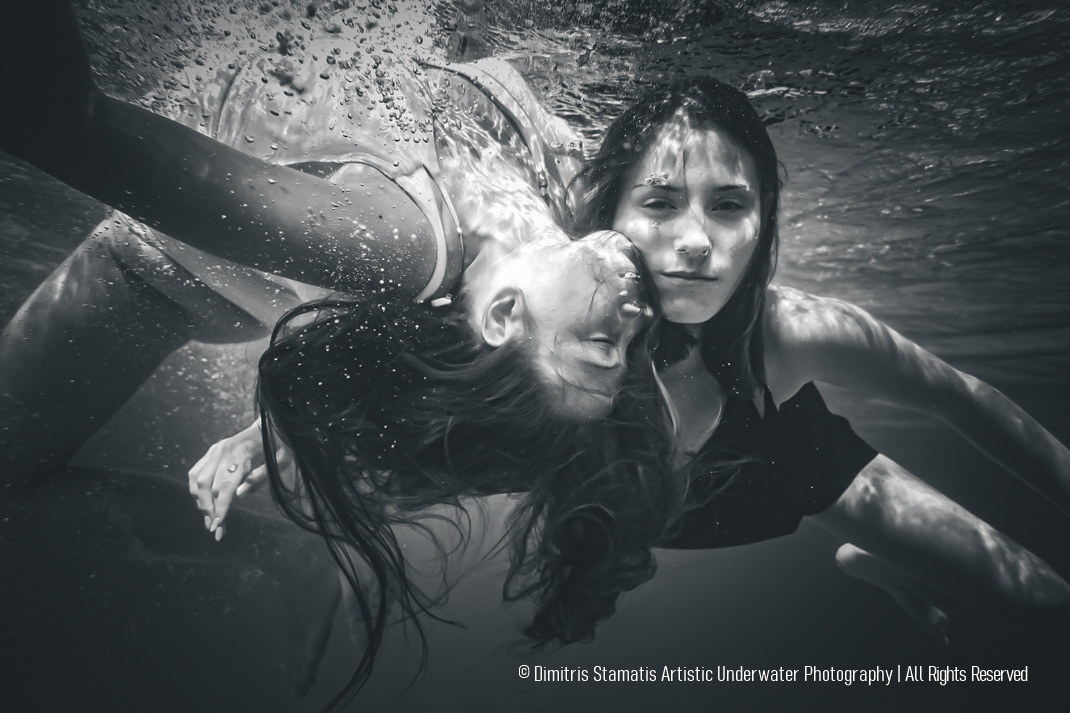
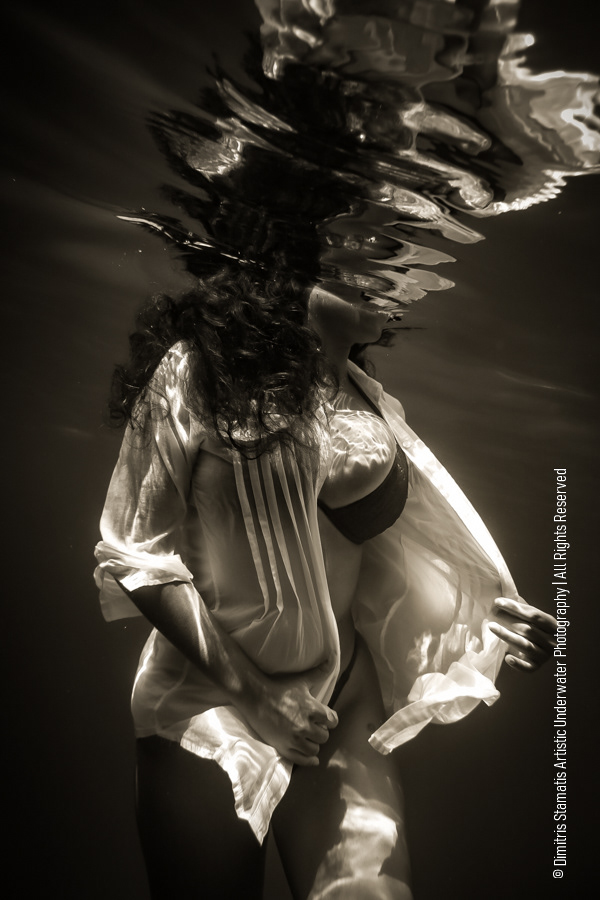
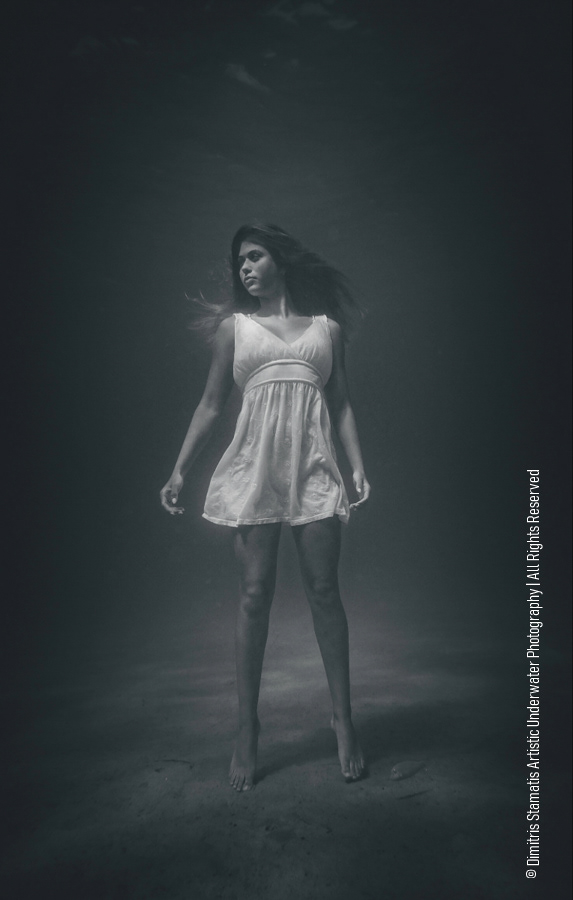
What usually dissolves in the blue, like a curve, a breath, or a moment of hesitation, now becomes the center of the image. In the end, the work is not about the sea itself. It is about what happens to the human presence when the sea fades into the background.
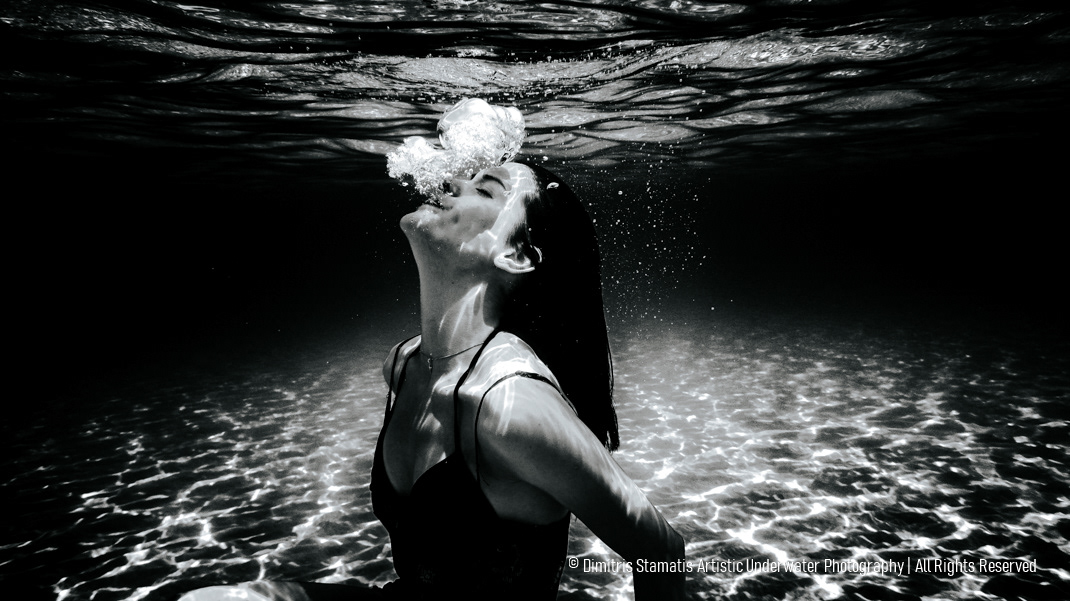
A study within the Aesthetic Styles series.